Gelagen Inositol Dose
JournalInositol At 40 mcg: What The Trials Used, In Grams
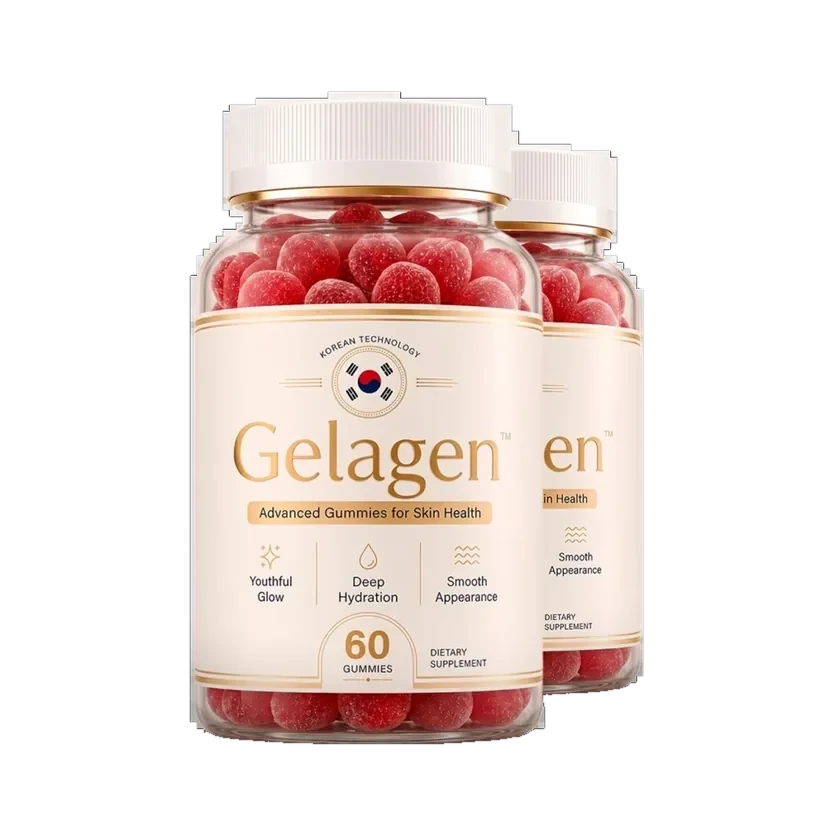
The Gelagen label prints inositol at 40 mcg per serving, with no Daily Value and no stated form. The published inositol trials gave 1,100 mg to 2 g at a time, up to 4 g a day, which is 27,500 to 100,000 times more. Those results describe those doses, in pregnant or subfertile women, and cannot be read onto this row. The accurate statement is that 40 mcg has not been tested, not that it works or that it does not.
What the label prints, and what it leaves out
The last row of the Gelagen Supplement Facts panel reads inositol, 40 mcg. It is the only one of the thirteen lines with no percentage beside it, because inositol has no Daily Value, and the panel carries a footnote to say so. It also does not say which inositol it is. Nothing on the label page or the ingredients page names an isomer or a source, so the honest description of the row is an amount, a unit and a name.
That is worth saying plainly, because the word inositol has a research history attached to it, and most of that history is written in a different unit. Someone who has read a headline about inositol and then sees the word on a gummy label will naturally join the two up. This page is about why the join does not hold, using nothing but the printed number and the published trials.
One more thing about the row before the arithmetic. The amounts on this panel are per serving, and a serving is two gummies. So 40 mcg is what a whole day of the product supplies, not what one gummy supplies, and nothing on the label divides it further.
Forty micrograms, written out in grams
A microgram is a millionth of a gram, and a milligram is a thousandth of one. The units climb in steps of a thousand, which is why a label can be perfectly correct and still fool the eye: a change of one word, mcg to mg to g, moves the amount by a factor of a thousand each time.
| Unit | Size | Gelagen inositol expressed in it |
|---|---|---|
| 1 gram (g) | 1,000 mg, or 1,000,000 mcg | 0.00004 g |
| 1 milligram (mg) | 1,000 mcg | 0.04 mg |
| 1 microgram (mcg) | One millionth of a gram | 40 mcg |
Set out like that, the shape of the problem is visible. Forty micrograms is four hundredths of a milligram and four hundred-thousandths of a gram. The choline row on the same panel is printed as 0.04 mg, which is the same forty micrograms written in a different unit, so the two smallest rows on the label are the same weight.
A full bottle makes the scale easier to feel. Sixty gummies at two a day is thirty servings, and thirty servings of 40 mcg is 1,200 mcg, which is 1.2 mg, or 0.0012 g. That is the whole bottle. Keep that figure in mind for the next two sections.

What inositol is, and why the body already has plenty of it
Inositol is a sugar-like molecule, a ring of six carbons with a hydroxyl group on each. Turning those groups around in space gives nine possible stereoisomers, and two of them get nearly all the attention: myo-inositol and D-chiro-inositol (Kiani 2021). Myo-inositol is by far the most common form in foodstuffs (Croze 2013), and a Cochrane review describes it as a naturally occurring sugar commonly found in cereals, corn, legumes and meat (Motuhifonua 2023).
It is also made in the body. Kiani and colleagues put it in one sentence: inositol requirements are partly met by dietary intake, while the rest is synthesized endogenously. A substance the body makes for itself as well as eating is a different case from a vitamin that has to arrive entirely from outside, and that is worth holding in mind whenever an amount of it is printed on a bottle.
None of this says the row is pointless or that the amount is wrong. It says that the useful question is not “is inositol good” but “how much inositol did the studies use, and how does that compare with the amount printed here.” The second question has an answer, and it is in the next section.
What the published trials actually gave people
The inositol work most people have heard about is in polycystic ovary syndrome and in pregnancy. Three randomised trials show the dosing pattern clearly, and each one reported its amounts in milligrams or grams rather than micrograms.
The most recent and the largest is a Dutch trial published in JAMA in October 2025. It ran at 13 hospitals and enrolled 464 pregnant people with PCOS who were between 8 and 16 weeks’ gestation. They were randomised one to one to sachets of myo-inositol, 2 g with 0.2 mg of folic acid, taken twice a day, or to a placebo containing the folic acid alone. The question was whether the supplement lowers the chance of a composite of gestational diabetes, preeclampsia or preterm birth. It did not: the composite happened in 25.0% of the myo-inositol group and 26.8% of the placebo group (relative risk 0.93, 95% confidence interval 0.68 to 1.28) (van der Wel 2025). That is 4 g of myo-inositol a day, and a null result.
An Italian trial in 2015 used the same dose and found something different. D’Anna and colleagues gave 220 obese pregnant women, from about 12 to 13 weeks, either myo-inositol 2 g plus 200 micrograms of folic acid twice a day or the folic acid alone. Gestational diabetes occurred in 14.0% of the myo-inositol group and 33.6% of the control group (odds ratio 0.34, 95% confidence interval 0.17 to 0.68). It was an open-label trial, meaning nobody was blinded (D’Anna 2015).
An Irish trial in 2017 used a lower amount, and also found no benefit. Farren and colleagues randomised 240 women with a family history of diabetes to a combination of 1,100 mg of myo-inositol and 27.6 mg of D-chiro-inositol with 400 micrograms of folic acid, or to the folic acid alone. Gestational diabetes was recorded in 23.3% of the inositol group and 18.3% of the control group, and the authors concluded that the combination did not prevent it (Farren 2017).
Three trials, two different answers on the same broad question, and the doses in all three were in the region of a gram or more. That is the fact to take away, well before the question of whether inositol works.
| Source | Inositol given | In micrograms | Multiple of 40 mcg |
|---|---|---|---|
| Gelagen panel, per serving | 40 mcg | 40 | 1 |
| Farren 2017 | 1,100 mg myo-inositol (plus 27.6 mg D-chiro-inositol) | 1,100,000 | 27,500 |
| D’Anna 2015 | 2 g twice a day | 2,000,000 each time | 50,000 per dose |
| van der Wel 2025 | 2 g twice a day | 2,000,000 each time | 50,000 per dose, 100,000 per day |
The multiples are this page’s arithmetic, worked from amounts printed in the trial abstracts and on the Gelagen panel. The 1,100 mg figure is as printed in the Farren abstract, which does not state how often it was taken.
The gap, in words
One 2 g sachet contains fifty thousand times the inositol on the Gelagen panel. Two of them, the daily amount in the Dutch and Italian trials, contain one hundred thousand times as much. Even the lowest amount among those three trials, the 1,100 mg in the Irish one, is twenty-seven and a half thousand times the printed figure.
Turn it the other way and the bottle is the comparison. The entire jar, thirty days of gummies, holds 1.2 mg. A single 2 g sachet is 2,000 mg. It would take about 1,667 jars to hold as much inositol as one sachet.
That is not a criticism of the label. Nothing in the rules says a Supplement Facts row has to match a trial dose, and a small amount of a substance the body already makes and eats is a normal thing to see on a multi-ingredient panel. It is a limit on what anyone can say. A result obtained at 2 g twice a day is a result about 2 g twice a day. It says what happened at that dose, in those women, over that stretch of pregnancy. It does not stretch down more than four orders of magnitude to a different product taken by a different population.
And the population is not incidental. Every trial above is in pregnant or subfertile women with PCOS or a diabetes risk. Gelagen is labelled for adults, and the site’s own safety notes say it is not for anyone pregnant or nursing, because the panel carries preformed vitamin A. So the trials differ from a Gelagen user in dose, in product, and in who took part.
What the pooled reviews say, and how sure they are
If one trial can mislead, the answer is to look at the pooled evidence, and here the pooled evidence is cautious. The Cochrane review of inositol for subfertile women with PCOS pooled 13 trials and 1,472 women, most of them using myo-inositol as pre-treatment for IVF. Its judgement was that the evidence was of low to very low quality and that it was uncertain whether myo-inositol improves live birth rates (odds ratio 2.42, 95% confidence interval 0.75 to 7.83, from two trials and 84 women). The reviewers described the main limitations as poor reporting of methods, inconsistency, and a lack of reporting of clinically relevant outcomes such as live birth (Showell 2018).
The Cochrane update on gestational diabetes pooled seven randomised trials and 1,319 women, six of them from Italy and one from Ireland. Myo-inositol may reduce the incidence of gestational diabetes (risk ratio 0.53, 95% confidence interval 0.31 to 0.90, from six studies), but the certainty of the evidence was low to very low. The reviewers pointed to inconsistency in dose, timing and study population, and to the limited generalisability of studies from two countries (Motuhifonua 2023). That review predates the 2025 Dutch trial above, which was a null result at the same dose the Italian trial used.
Croze and Soulage, reviewing the wider metabolic literature in 2013, framed their subject as the potential benefits of a myo-inositol supplement in disorders linked to insulin resistance, and the word is theirs (Croze 2013).
If you are pregnant, planning a pregnancy, or managing PCOS or diabetes, the doses above are medical decisions for a clinician who knows your history. Nothing on this page is a reason to start, stop or change one.
What can be said about the 40 mcg row, and what cannot
Some things are solid, because they come from the label itself. The panel prints 40 mcg of inositol per serving of two gummies. The row has no Daily Value and no stated form. The amount is a fifty-thousandth of a single trial dose and a hundred-thousandth of the daily amount in the biggest recent trial. The site also notes that Gelagen has not been the subject of a published clinical trial, so no study measured what this exact product does.
Other things cannot be said honestly. Nobody can say that 40 mcg does anything for hormones, insulin, blemishes, hair or nails, because no study has tested 40 mcg of inositol for any of them. Nobody can equally say that it does nothing, because untested is not the same as disproven. The gap is a gap in the evidence, and the responsible thing to do with a gap is to leave it labelled as one.
The label does not say why 40 mcg was chosen, and this page will not guess. What it can do is put the amount where a reader can see it. If inositol is the reason you are looking at this product, the amounts above are what that reason rests on, and the panel is not built to meet them. If the reason is the rest of the panel, biotin, folate, vitamin C and the others, the inositol row is one small line among thirteen and can be read that way.
A short habit that works on any label
The same discipline applies well beyond this one row, and it is quick.
- Convert the unit. Write the printed amount in milligrams or grams so it can sit beside a trial figure. A label in micrograms and a paper in grams are describing different orders of magnitude.
- Divide. Take the trial dose and divide by the label amount. If the answer is in the thousands, the trial is background reading and not a prediction.
- Check the people. A trial in pregnant women with PCOS tells an adult reading a skin, hair and nails label very little about their own case.
- Read the pooled evidence, not the headline trial, and look for the words low certainty.
- Leave the gap labelled. Where no study exists at the label dose, the accurate statement is that it has not been tested.
Applied to this panel, the habit gives a short and unexciting answer: a small printed amount of a substance the body makes, sitting a very long way below the amounts anyone has studied. That is a legitimate thing for a label to show. It is not a claim, and this page does not turn it into one. For the rest of the panel, the biotin post covers the largest number on it, and the field-by-field walk through the panel covers the footnote that inositol sits under.
- van der Wel AWT, Frank CMC, Bout-Rebel R, et al. Myo-inositol Supplementation to Prevent Pregnancy Complications in Polycystic Ovary Syndrome: A Randomized Clinical Trial. JAMA. 2025;334(13):1151-1159. https://pubmed.ncbi.nlm.nih.gov/40920401/
- D’Anna R, Di Benedetto A, Scilipoti A, Santamaria A, Interdonato ML, Petrella E, Neri I, Pintaudi B, Corrado F, Facchinetti F. Myo-inositol Supplementation for Prevention of Gestational Diabetes in Obese Pregnant Women: A Randomized Controlled Trial. Obstet Gynecol. 2015;126(2):310-315. https://pubmed.ncbi.nlm.nih.gov/26241420/
- Farren M, Daly N, McKeating A, Kinsley B, Turner MJ, Daly S. The Prevention of Gestational Diabetes Mellitus With Antenatal Oral Inositol Supplementation: A Randomized Controlled Trial. Diabetes Care. 2017;40(6):759-763. https://pubmed.ncbi.nlm.nih.gov/28325784/
- Motuhifonua SK, Lin L, Alsweiler J, Crawford TJ, Crowther CA. Antenatal dietary supplementation with myo-inositol for preventing gestational diabetes. Cochrane Database Syst Rev. 2023;2(2):CD011507. https://pubmed.ncbi.nlm.nih.gov/36790138/
- Showell MG, Mackenzie-Proctor R, Jordan V, Hodgson R, Farquhar C. Inositol for subfertile women with polycystic ovary syndrome. Cochrane Database Syst Rev. 2018;12(12):CD012378. https://pubmed.ncbi.nlm.nih.gov/30570133/
- Croze ML, Soulage CO. Potential role and therapeutic interests of myo-inositol in metabolic diseases. Biochimie. 2013;95(10):1811-1827. https://pubmed.ncbi.nlm.nih.gov/23764390/
- Kiani AK, Paolacci S, Calogero AE, Cannarella R, Di Renzo GC, Gerli S, Della Morte C, Busetto GM, De Berardinis E, Del Giudice F, Stuppia L, Facchinetti F, Dinicola S, Bertelli M. From Myo-inositol to D-chiro-inositol molecular pathways. Eur Rev Med Pharmacol Sci. 2021;25(5):2390-2402. https://pubmed.ncbi.nlm.nih.gov/33755975/

Read the Gelagen label for yourself
Thirteen nutrients with an amount beside every one, and two gummies a day.
$49 to $79 a bottle
Order Gelagen