Gelagen Official Website Biotin Numbers
JournalWhat A Biotin Number On A Label Is Actually Worth
Biotin labels on this shelf cluster at 5,000 and 10,000 mcg against an adequate intake of 30 mcg. Both halves of the answer matter: a deficiency does cause hair loss and brittle nails and correcting it helps, and in people who are not deficient the published evidence is thin. A number alone settles neither.
The reference is 30 mcg, and almost nobody is short of it
Biotin has an Adequate Intake rather than a Recommended Dietary Allowance, which is what a nutrient gets when the evidence is not strong enough to set a formal allowance. For adults from nineteen it is 30 mcg a day, and the Daily Value a label prints against is the same 30 mcg (NIH’s biotin fact sheet).
Thirty micrograms is a very small amount of a vitamin that is widely distributed in food, and frank biotin deficiency is rare in the United States. That is the first thing a label number has to be read against, because it decides what the number is for.
Gelagen prints 5,000 mcg, which is 5 mg, and 5,000 divided by 30 is about 167. So the panel carries a hundred and sixty-seven times the intake an adult is judged to need. That is arithmetic against a published figure, and it is the most useful sentence anybody can put next to a biotin number.
Where 5,000 mcg came from
The honest answer is that no trial set it. Soleymani and colleagues looked at this question in 2017 and reported that to that point there had been no clinical trial of biotin for alopecia of any kind, and no randomised trial of its effect on hair quality or quantity in humans (Soleymani 2017). A number cannot come from a literature that does not exist.
What it did come from is a shelf. Five thousand and ten thousand micrograms are the two figures this category converged on, they are round, and they look substantial beside a two-digit reference. Once one product prints a large number, a product printing a small one looks underpowered next to it, and the number ratchets. That describes how a market behaves rather than how any particular seller behaves.
None of which makes 5,000 mcg a bad number. It makes it an unexplained one, and the response to an unexplained number is to put it beside the reference and read both.
What a five-figure percentage in the Daily Value column describes

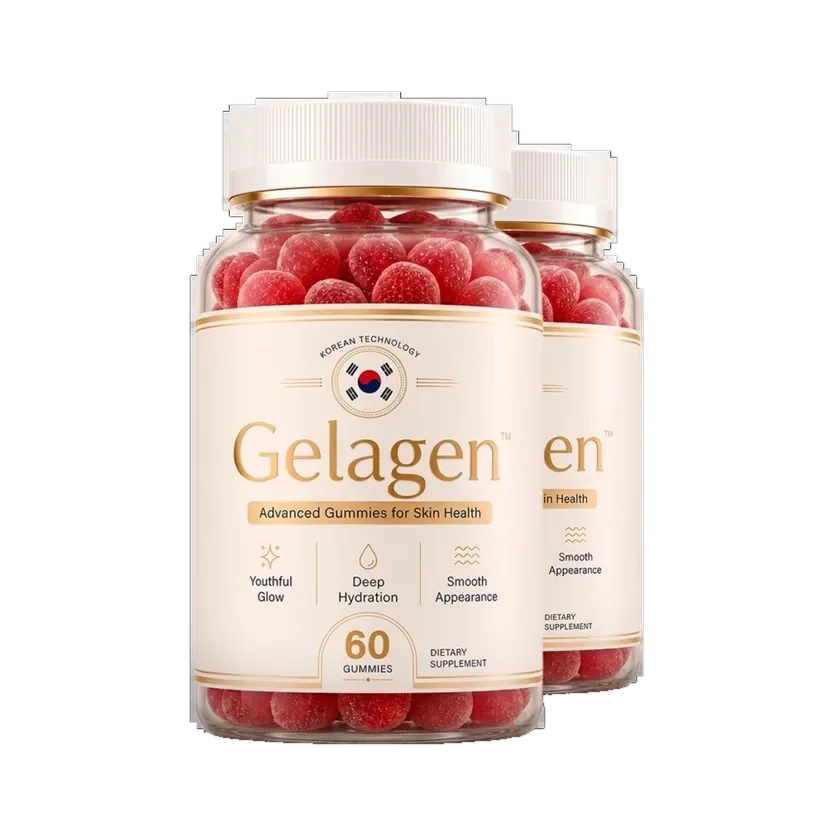
A panel showing more than sixteen thousand per cent looks like a claim and is not one. It is the printed amount divided by the Daily Value, and the rule requires it. A very large percentage says the amount is far above the reference, and nothing at all about what the amount will do.
The same column on the same label runs the other way too. Vitamin C at 20 mg is about 22 per cent of its Daily Value, and choline at 0.04 mg is roughly seven thousandths of one per cent of the 550 mg Daily Value, which is a trace. The label page sets all thirteen rows beside their references.
The useful habit is to stop treating the percentage as a score and read it as a distance: how far this amount sits from the reference, and in which direction.
What biotin does when somebody is genuinely deficient
This half of the answer is well established and should be said first, because it is true. NIH’s own words are that signs of biotin deficiency include skin rashes, hair loss and brittle nails (the ODS biotin fact sheet), and MedlinePlus says the same in plainer language. Correcting a deficiency addresses its signs.
The clinical literature that exists is about exactly those people. Patel and colleagues reviewed the published use of biotin for hair and found eighteen reported cases, every one in a patient who already had an underlying cause of poor hair or nail growth (Patel 2017). All of them improved.
It is also a finding that does not travel. Eighteen case reports in people with an identified underlying cause is not a result about somebody standing in a shop with no reason to think anything is short, and the review says so in its own conclusion.
What the evidence shows in people who are not
Thin, and the strongest source on the subject says so itself. On supplementation for brittle nails, NIH records that the evidence consists of “three small studies that did not include a placebo group”, and that those reports “do not indicate the baseline biotin status of study participants” (NIH on biotin supplementation). In them, nail thickness rose by 25 per cent in eight patients and by 7 per cent in fourteen, and the second of those was not statistically significant.
Patel’s review reaches the same place from the hair side: there is a lack of sufficient evidence for supplementation in healthy individuals. Dasgupta, writing about the laboratory problem rather than the cosmetic one, says in passing that in general normal individuals do not get any benefit from taking a biotin supplement (Dasgupta 2022).
One distinction is easy to lose. Untested is not disproven. Soleymani’s point was that the trials had not been run, not that they had been run and failed (Soleymani 2017). In people who are not deficient, nobody knows.
| What was studied | What the record shows |
|---|---|
| Number of studies | Three, all small |
| Placebo group | None of the three included one |
| Baseline biotin status | Not indicated in the reports |
| Result, first study | Nail thickness up 25 per cent in 8 patients |
| Result, second study | Up 7 per cent in 14 patients, not statistically significant |
Taken from the NIH Office of Dietary Supplements fact sheet on biotin rather than summarised from the trials, because the fact sheet is the source you can open and check in one click.
Why no upper limit has been set, and what that does not mean
Biotin has no Tolerable Upper Intake Level. The Food and Nutrition Board did not set one because, in NIH’s wording, there is no evidence in humans that biotin is toxic at high intakes (the ODS biotin fact sheet). That is a genuine point in the category’s favour.
What it does not mean is that any amount has been cleared. An absent upper limit records missing toxicity data rather than a safety finding, and says nothing about doses nobody has studied.
There is also a practical reason the missing ceiling is not the end of the subject. The documented problem with biotin at supplement amounts is not what it does to the person. It is what it does to the laboratory testing them.
The blood-test sentence that costs nothing

Gelagen on the official website
Biotin at 5,000 mcg, folate at 442 mcg DFE and eleven more nutrients with an amount beside every one. Sixty days from the date you buy.
Order GelagenA large family of laboratory tests works by binding biotin to streptavidin. Extra biotin in the blood competes with that chemistry and the result moves. Which way depends on the format: competitive immunoassays read falsely high and sandwich immunoassays read falsely low (Dasgupta 2022 on the mechanism).
Troponin, the test used to diagnose a heart attack, is a sandwich assay, so interference there runs falsely low. That is the direction that hides a problem rather than inventing one, which is why regulators talk about it. The FDA states that biotin can significantly interfere with certain lab tests and cause incorrect results which may go undetected, and that it has continued to receive adverse event reports indicating biotin interference caused falsely low troponin results (FDA on biotin and troponin assays). NIH records the worst documented outcome: a patient with a high intake of supplemental biotin died after a troponin test that read falsely low (NIH on biotin and laboratory tests).
Now the part this website will not blur. The published human work starts at 10 mg a day. Li and colleagues gave six healthy adults 10 mg a day for seven days and found interference in nine of twenty-three biotinylated assays and in none of fourteen non-biotinylated controls (Li 2017 in JAMA). NIH cites case reports in the range of 10 to 300 mg a day, and a single 10 mg dose interfering with thyroid testing within twenty-four hours. This label prints 5 mg. That is half the lowest amount at which interference has actually been demonstrated, and nobody has published a study at 5 mg. So this page does not tell you that Gelagen will distort a troponin test, because that has not been tested and the claim would not be checkable.
Both halves are true at once: 5,000 mcg is 167 times more biotin than anybody needs, and it is half the lowest tested interference dose. The useful advice does not depend on closing that gap, which is why it is the line to keep.
Before any blood is drawn, mention that you take a biotin supplement. It costs nothing, it is what FDA asks patients to do, and it lets the laboratory decide whether the timing matters. Do not stop a prescription or delay a test on the strength of a web page; tell the person holding the needle and let them handle it.
| Figure | What it is | Where it comes from |
|---|---|---|
| 30 mcg a day | Adequate Intake, adults from nineteen | NIH ODS |
| 30 mcg | The Daily Value a panel calculates against | NIH ODS |
| None set | Tolerable Upper Intake Level | NIH ODS |
| 5,000 mcg, which is 5 mg | What this label prints per serving | The Gelagen panel |
| 10 mg a day for 7 days | Lowest dose shown to interfere | Li 2017, JAMA |
| 10 to 300 mg a day | The range in the case reports | NIH ODS |
The label sits at half the lowest amount anybody has tested for interference, and no study has been run at its own figure.
What to do with a biotin number on a label
A biotin figure is not useless. It is a weaker signal than its size suggests, and it can be read properly in under a minute.
- Put the number beside 30 mcg. Everything else follows from the multiple, and a label that hides the reference is doing you no favours.
- Treat the percentage as a distance from a reference, not as a strength rating. Sixteen thousand per cent is arithmetic.
- Ask whether you have a reason to think you are short. If you do, that is a blood test and a conversation, not a shelf decision.
- Read the other twelve rows. A panel is a formula and the headline nutrient is one line of it.
- Keep the blood-test sentence. It is free, fully supported and useful whatever you decide.
- Judge the product on the whole label, the serving, the price per day and the guarantee.
On this label the twelve rows underneath are worth the look: folate at 442 mcg DFE and vitamin B12 at 6 mcg sit above their references, pantothenic acid lands almost exactly on its 5 mg intake, and six others sit below a full day’s worth. The ingredients page prints every one with its reference beside it.
- Biotin: Fact Sheet for Health Professionals, published by NIH Office of Dietary Supplements → view on ods.od.nih.gov
- Association of Biotin Ingestion With Performance of Hormone and Nonhormone Assays in Healthy Adults, published by Li D, Radulescu A, Shrestha RT, Root M, Karger AB, Killeen AA, Hodges JS, Fan SL, Ferguson A, Garg U, Sokoll LJ, Burmeister LA [JAMA, 2017;318(12):1150-1160, Erratum in: JAMA, 2017;318(19):1937] → view on pubmed.ncbi.nlm.nih.gov
- Immunoassay design and biotin interference, published by Dasgupta A [Adv Clin Chem, 2022;109:165-183] → view on pubmed.ncbi.nlm.nih.gov
- Biotin Interference with Troponin Lab Tests - Assays Subject to Biotin Interference, published by U.S. Food and Drug Administration [Center for Devices and Radiological Health, Content current as of 21 June 2022] → view on fda.gov
- A Review of the Use of Biotin for Hair Loss, published by Patel DP, Swink SM, Castelo-Soccio L [Skin Appendage Disord, 2017;3(3):166-169] → view on pubmed.ncbi.nlm.nih.gov
- The Infatuation With Biotin Supplementation: Is There Truth Behind Its Rising Popularity? A Comparative Analysis of Clinical Efficacy versus Social Popularity, published by Soleymani T, Lo Sicco K, Shapiro J [J Drugs Dermatol, 2017;16(5):496-500] → view on pubmed.ncbi.nlm.nih.gov
- Pantothenic acid and biotin, published by MedlinePlus, U.S. National Library of Medicine, National Institutes of Health [Medical Encyclopedia] → view on medlineplus.gov
Read the Gelagen label for yourself
Thirteen nutrients with an amount beside every one, two gummies a day, and sixty days from the date you buy.
$49 to $79 a bottle · 60 days from the day you buy
Order Gelagen On The Official WebsiteFree US shipping on three and six bottles · 60-day money-back guarantee · lot GEL-26/GE-6362