Gelagen Journal Zinc Without A Copper Line
JournalZinc At 2.7 Mg And The Copper Line This Label Doesn't Print
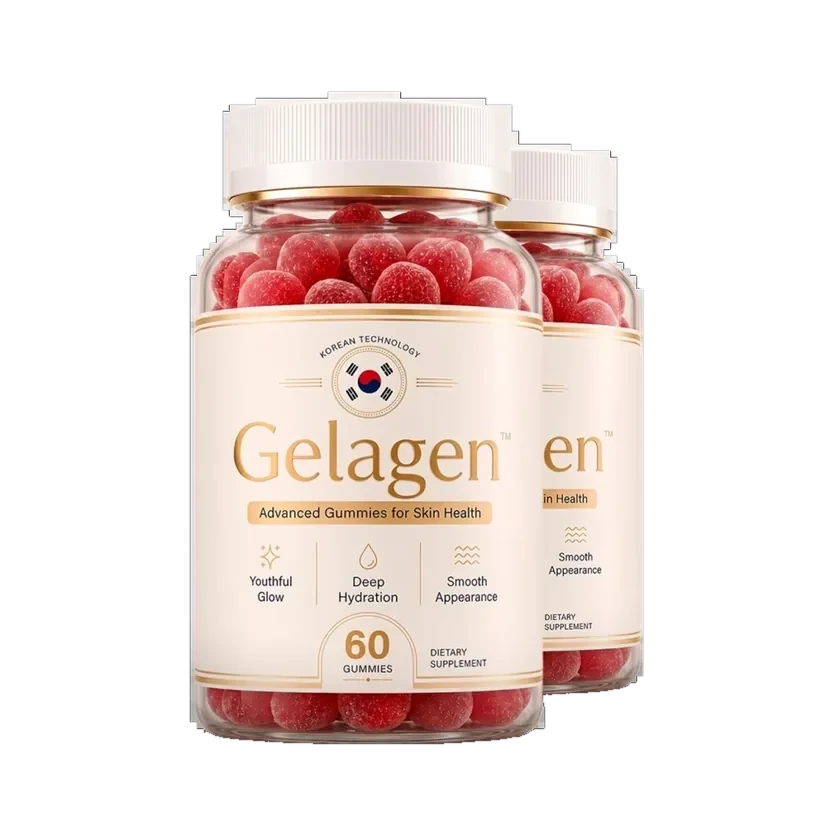
Gelagen's panel carries 2.7 mg of zinc and no line for copper anywhere among its thirteen nutrients. The two minerals compete for the same absorption pathway, and the published research on that competition uses doses of 50 mg a day and up, held for weeks or years. Gelagen's 2.7 mg is roughly a bootleg-fraction of the lowest dose that research has actually tied to a measurable change, which is a different statement from saying the interaction cannot matter to anyone.
Why a zinc line raises a copper question at all
Zinc and copper share more than a row on a mineral chart. Inside the small intestine both metals are handled by overlapping transport machinery, and the body has a defence against getting too much of either: a protein called metallothionein, made in the cells lining the gut, that binds metal ions and holds them until those cells are shed a few days later. Zinc is a strong trigger for metallothionein production. Feed the gut enough zinc, and it starts making more metallothionein than it needs for zinc alone, and that extra protein binds copper too, trapping it in cells that are about to be sloughed off and lost rather than absorbed into the bloodstream.
That is the mechanism behind a finding nutrition science has known for decades: sustained high zinc intake can lower the body's copper status, sometimes low enough to cause a genuine deficiency. It is not a rumor and not a marketing talking point either way. It is a documented, mechanistic interaction between two minerals the body absorbs through the same doorway. The question worth asking about any zinc-containing product is not whether the interaction exists, but where the product's own dose sits against the doses that have actually produced it.
2.7 mg against the reference, and what's missing beside it

Gelagen's label carries 2.7 mg of zinc per two-gummy serving. The Daily Value the FDA sets for zinc on a supplement panel is 11 mg, so 2.7 mg works out to about 25 percent of it — a modest fraction, not a headline number the way this panel's biotin line is. The wider reference range is similar: the Institute of Medicine's Recommended Dietary Allowance for zinc is 11 mg a day for adult men and 8 mg for adult women, so a single serving supplies roughly a quarter to a third of what an adult is judged to need across an entire day from every source, food included.
What the panel does not carry is any amount of copper at all. Not a trace line, not a footnote — copper simply is not one of the thirteen named nutrients. That is worth stating plainly before going further, because the rest of this page is about a real interaction between two minerals, and only one of them is on this label.
What a controlled trial actually gave, and for how long
The clearest early evidence that zinc supplements can move copper status downward in otherwise healthy adults comes from a small controlled trial published in 1984. Fischer and colleagues gave healthy adult men either two daily doses of 25 mg of zinc — 50 mg a day in total — or a placebo, for six weeks, and tracked two copper-dependent markers: plasma ferroxidase activity, better known as ceruloplasmin, and the activity of an enzyme called erythrocyte copper-zinc superoxide dismutase, which needs both metals bound to it to function (Fischer 1984).
At two, four and six weeks, plasma copper and ceruloplasmin activity showed no statistically significant difference between the zinc group and the placebo group. But the superoxide dismutase reading told a different story: it fell in the zinc-supplemented group, and by six weeks that drop reached statistical significance. The authors' own conclusion was measured rather than alarming — that the supplement appeared to be decreasing the copper status of the group — and the enzyme that caught it first is exactly the kind of sensitive, early marker researchers look for before a more obvious sign like anemia shows up.
The dose in that trial was 50 mg of zinc a day, given as two 25 mg doses, sustained for six weeks in people with no reason to think their copper status was already compromised. That is the study a copper-interaction claim usually traces back to, and it is worth having the actual numbers rather than the reputation of the finding.
What a 2026 case review found, and at what doses
| Source | Design | Zinc dose | What moved |
|---|---|---|---|
| Fischer 1984 | Controlled trial, 6 weeks, healthy men | 50 mg/day (25 mg twice daily) | Erythrocyte Cu,Zn-SOD fell by week 6; ceruloplasmin unchanged |
| Dutta 2026 | Systematic review, 37 clinical cases, 1972–2025 | ≈50 mg to >1,500 mg/day, weeks to years | Anemia, low white cells, low serum copper in every case |
| This label | Two gummies, once daily | 2.7 mg/day | Not a dose either source tested |
A systematic review published in 2026 widened the lens from a single controlled trial to the full published record of zinc causing actual clinical harm. Dutta and colleagues searched the literature for descriptive studies of zinc-induced blood disorders in humans — anemia, low neutrophil or white-cell counts, and in severe cases pancytopenia or bone-marrow suppression — and found thirty-four publications describing thirty-seven individual cases spanning 1972 to 2025 (Dutta 2026). The zinc exposure in those cases came from oral supplements, denture adhesive creams (which historically contained zinc), and in a few unusual cases from swallowed coins. Reported daily elemental zinc doses ranged from roughly 50 mg to more than 1,500 mg, sustained for anywhere from weeks to years. Serum copper was reduced in every one of the thirty-seven cases, and most patients recovered after stopping the zinc source and adding copper back, though it took weeks to months and any neurological symptoms improved more slowly.
Read the dose column again. The lowest end of that clinical case range — the smallest daily amount anybody in thirty-seven published cases was documented taking before harm was identified — is about 50 mg. Gelagen's panel carries 2.7 mg. That is not a rounding difference; it is roughly one-eighteenth of the lowest dose in the case series, and about one-eighteenth of the dose Fischer used in a controlled trial that still needed six weeks to show a measurable, if subtle, effect.
Why a beauty-category panel would print zinc and skip copper
None of this explains why copper is absent from the panel in the first place, and the honest answer is that this page cannot know the formulator's reasoning, only describe what is common in the category. Skin, hair and nail gummies built around a beauty angle tend to headline biotin and pack a broad multivitamin base around it; copper is not a nutrient consumers search for by name in this category the way zinc or biotin are, and a thirteen-nutrient gummy has a limited amount of volume to spend on additional trace minerals. Most adult diets in wealthier countries also supply enough copper on their own to meet the 900 mcg Recommended Dietary Allowance for adults without any supplementation at all (NIH's copper fact sheet), which is a different statement from a guarantee about any one person's diet, but it is likely part of why formulators do not treat copper as a must-include line the way they do zinc or iodine.
What can be said with more confidence is what an absent line does not mean. It does not mean the product has been tested for interaction risk and cleared. It does not mean the formulator considered copper and decided against it for a documented reason. An absent line on a Supplement Facts panel means exactly one thing under the labeling rule: the maker is not claiming to supply that nutrient, so it owes the label no percentage for it (how the rest of this panel is built).
It is also worth being precise about what "no copper on this panel" does and does not tell a reader about the finished gummy sitting in a jar. A Supplement Facts panel discloses added nutrients, the ones the maker is formulating to and claiming a specific amount of. It says nothing about trace amounts of a mineral that might occur incidentally from a raw ingredient, because those are not required to be disclosed unless the maker chooses to make a claim about them. So the correct reading of this panel is narrower than "this product contains zero copper" and closer to "this product makes no copper claim and owes none" — a labeling fact, not a chemistry fact about the finished gummy.
Reading the absence of a line, not just the presence of one
The habit worth building here is the same one this journal keeps returning to: a Supplement Facts panel is arithmetic, and arithmetic works in both directions. A large number is not automatically a benefit, and a missing line is not automatically a risk. What actually matters is the total exposure a person is accumulating across everything they take, not any single product's printed figures read in isolation.
For most people taking Gelagen as printed — two gummies a day, nothing else contributing meaningful zinc — the copper interaction described above sits nowhere near the doses that produced it in either source cited on this page. That is a specific, checkable statement about 2.7 mg, not a blanket statement that zinc supplements are safe at any dose, which the case review above directly contradicts for doses in the tens to hundreds of milligrams.
Who this is actually worth asking a clinician about
The dose math above changes for anyone stacking zinc from more than one source. A separate zinc lozenge taken through a cold, a standalone immune-support tablet, a zinc-heavy multivitamin taken alongside this gummy, or in rarer cases a zinc-containing denture adhesive used daily — each one adds to the running total, and the case reports Dutta's team reviewed were almost always built on exactly that kind of stacking rather than any single low-dose product.
- Anyone already taking a separate zinc supplement of 15 mg or more a day alongside this gummy
- Anyone using zinc-containing denture adhesive on a daily basis over months
- Anyone with unexplained anemia, low white-cell counts, or a diagnosed copper deficiency
- Anyone managing Wilson's disease or another condition where copper handling is already a medical issue
For any of those situations, the right step is a conversation with a clinician who can order a serum copper or ceruloplasmin test if warranted, not a decision made from a label alone.
It is also worth noting what the case review's own numbers say about how this kind of harm typically develops, because it is rarely fast or subtle. Dutta and colleagues found exposure durations ranging from weeks to years across their thirty-seven cases, and the pattern that recurs across the published record is chronic, sustained overuse of a concentrated zinc source — not a single elevated day, and not a modest gummy taken as printed. That timeline is part of why a serum copper or ceruloplasmin test, rather than guesswork, is the right tool: those markers are sensitive enough to catch a developing problem well before more obvious signs like anemia appear, which is exactly what the ceruloplasmin and superoxide dismutase readings were doing in Fischer's original six-week trial.
What to do with a 2.7 mg zinc line

See the full Gelagen label
Zinc at 2.7 mg, twelve more nutrients with an amount beside every one, and the panel exactly as printed.
Order Gelagen- Note the number: 2.7 mg of zinc, about 25 percent of the Daily Value, and no copper line beside it.
- Add up every other source of zinc in your routine before treating this line in isolation.
- Treat 50 mg a day as the floor of the doses research has actually tied to a copper problem, not 2.7 mg.
- If you take a separate zinc product regularly, that is the conversation to have with a clinician, not this one.
- Read the rest of the panel the same way: the number, the reference, then the gap between them.
- NIH Office of Dietary Supplements. Zinc: Fact Sheet for Health Professionals. https://ods.od.nih.gov/factsheets/Zinc-HealthProfessional/
- NIH Office of Dietary Supplements. Copper: Fact Sheet for Health Professionals. https://ods.od.nih.gov/factsheets/Copper-HealthProfessional/
- Fischer PW, Giroux A, L'Abbé MR. Effect of zinc supplementation on copper status in adult man. Am J Clin Nutr. 1984;40(4):743-746. https://pubmed.ncbi.nlm.nih.gov/6486080/
- Dutta A, Chaudhary V, Kumari S, Rohita, Sharma KK, Pal B. Zinc-Induced Hematologic Toxicities: A Systematic Review of Descriptive Studies. Biol Trace Elem Res. 2026;204(9):6628-6642. https://pubmed.ncbi.nlm.nih.gov/42087025/
Read the Gelagen label for yourself
Thirteen nutrients with an amount beside every one, two gummies a day, and sixty days from the date you buy.
$49 to $79 a bottle · 60 days from the day you buy
Order GelagenFree US shipping on three and six bottles · 60-day money-back guarantee