Gelagen Official Website Choline’s Real Job
JournalWhat Choline Actually Does, At An Amount That Barely Counts
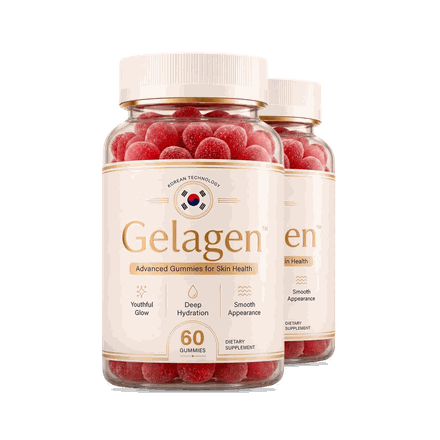
Choline is a genuine essential nutrient with real, well-documented jobs: building the neurotransmitter acetylcholine, forming the phospholipids that make up cell membranes, and helping the liver package and export fat. Controlled feeding studies show that when intake runs well below the Adequate Intake, liver and muscle damage follows (NIH’s choline fact sheet). Gelagen’s panel prints 0.04 mg of it per serving, against a 550 mg Adequate Intake — about one part in thirteen thousand seven hundred. The biology below is real. The row is not a meaningful source of it.
What choline is, and why it has a reference intake at all
Choline is classified as an essential nutrient: the body can make a small amount of it internally, but not reliably enough to cover its needs from that pathway alone, so diet has to supply the rest. That combination — genuinely needed, partly but not fully made by the body — is exactly why the Food and Nutrition Board publishes a reference intake for it at all, the same way it does for vitamins the body cannot make in any amount.
Choline’s reference figure is an Adequate Intake rather than a Recommended Dietary Allowance, a distinction that comes down to how much the evidence currently supports calculating rather than how important the nutrient is. A separate page on this website works through what that AI-versus-RDA distinction actually means and which of this panel’s other rows carry which designation; this page is about what choline does, not how its number was classified.
That is worth flagging up front, because the two questions get folded together easily: an Adequate Intake is sometimes read as a softer or less certain figure than a Recommended Dietary Allowance, and the classification is about the state of the supporting evidence, not about how well-understood the nutrient’s job in the body is. Choline’s functions, described below, are established through controlled research; it is the specific number used to set a daily target that carries the AI label rather than the RDA one.
The jobs NIH’s fact sheet lists
NIH’s Office of Dietary Supplements lists several concrete roles for choline in the body, and none of them is decorative. It is the direct precursor to acetylcholine, a neurotransmitter involved in muscle control, memory and mood. It is a structural building block of phosphatidylcholine and sphingomyelin, two of the phospholipids that make up cell membranes throughout the body. Through its oxidized form, betaine, it donates methyl groups into the same one-carbon metabolism that folate and vitamin B12 also feed, a pathway involved in DNA synthesis and in controlling homocysteine levels. And it is required for the liver to package fat as very-low-density lipoprotein and export it into the bloodstream, rather than letting it accumulate in liver cells.
Each of those four roles sits in a different part of the body — nerve signaling, the membrane around essentially every cell, a metabolic pathway shared with two other vitamins, and a specific liver export mechanism — which is part of why choline does not reduce neatly to one sentence the way some single-function nutrients do. A shortfall in any one of the four has a distinct signature, and the liver and muscle findings described below are the ones that show up first and most reliably under controlled conditions.
| Role | What it involves |
|---|---|
| Neurotransmitter precursor | Direct building block of acetylcholine |
| Membrane structure | Component of phosphatidylcholine and sphingomyelin |
| Methyl-group donor | Via betaine, feeding one-carbon metabolism |
| Liver fat export | Needed to package fat as VLDL and move it out of the liver |
What happens when intake is genuinely short
This part of the picture is well established, and it is worth stating plainly because it is the part that gives the nutrient its reference intake in the first place. In controlled feeding studies, where healthy adults were placed on diets formulated to deliver measured, low choline intakes, a majority developed signs of liver or muscle damage — the kind of findings that show up as elevated liver enzymes, fatty liver on imaging, or muscle damage markers in blood tests — and those signs reversed when choline was added back to the diet (NIH on choline deficiency).
That is a real, demonstrated cause-and-effect relationship, established under controlled conditions rather than inferred from population surveys. It is also the reason choline earns a place on a Supplement Facts panel at all: a nutrient with no demonstrated deficiency effect in humans would have no reference intake to print a percentage against.

The Adequate Intake, and what most diets already supply
NIH publishes choline’s Adequate Intake at 550 mg a day, and that same figure is the Daily Value a Supplement Facts panel calculates its percentage column against. Choline is not a rare nutrient in an ordinary diet: eggs, meat, fish and certain vegetables, cruciferous ones among them, are recognized food sources, and a diet that includes them routinely contributes meaningfully toward that 550 mg figure without any supplement involved.
The body also makes some choline on its own, through a liver pathway that converts a related membrane lipid into phosphatidylcholine using methyl groups ultimately sourced from folate and methionine metabolism. That internal production is part of why choline status in the general population is not routinely tracked the way some other nutrient deficiencies are — between food intake and the body’s own synthesis, most people are not the controlled-diet research subjects described above.
The number on this label: 0.04 mg
Against that 550 mg reference, Gelagen’s panel prints 0.04 mg of choline per two-gummy serving. Do the division the way any other row on the panel is read: 0.04 divided by 550 is 0.0000727, which as a percentage is 0.00727 percent. Flip that fraction over and it reads as roughly one part in 13,750 — 550 divided by 0.04.
| Figure | Value |
|---|---|
| Printed amount | 0.04 mg |
| Adequate Intake / Daily Value | 550 mg |
| Printed amount as a fraction of the AI | 1 part in about 13,750 |
| Printed amount as a percentage of the AI | 0.00727% |
The printed figure is taken directly from the Gelagen label; the reference figure is NIH’s published Adequate Intake, which is also the Daily Value used on the panel. Worked out to more decimal places, the fraction is 0.0000727, a number small enough that rounding it to a whole-percent column the way most rows are printed would show zero.
What one part in thirteen thousand seven hundred can supply
Set against the biology described above, a fraction this small is not positioned to move any of it. The controlled studies that demonstrated real deficiency effects were built around diets engineered to deliver choline intakes far below the Adequate Intake as a whole, not around a single gummy-scale addition measured in hundredths of a milligram; 0.04 mg is a rounding error against the gram-and-hundreds-of-milligrams range those studies, and the 550 mg reference itself, are working in.
That does not make choline’s biology any less real, and it does not mean this label is doing anything improper by printing the figure — the labeling rule requires a declared amount for every nutrient a product contains, however small. It does mean that whatever choline function a person relies on, this particular row is not where it is coming from in any measurable way.
What national survey data say about ordinary intake
NIH’s fact sheet also draws on national dietary survey data, and the general picture it describes is that a large share of people in the United States consume less choline from food than the 550 mg Adequate Intake calls for. That is a statement about average intake patterns across a population, not a diagnosis of any individual, and it sits alongside a separate, equally important observation: clinically recognized choline deficiency remains uncommon outside the kind of controlled research diets described above.
Those two facts side by side — common intake below the AI, uncommon diagnosed deficiency — are not a contradiction. An Adequate Intake is set as an estimate believed sufficient for nearly everyone in a healthy population, with some built-in margin, and everyday diets also vary day to day in ways a single research snapshot does not capture. The gap between average survey intake and the reference figure is real; it does not automatically translate into the liver and muscle findings documented under tightly controlled feeding conditions.
Why a row this small does not automatically mean a deficiency
It is worth being clear about what a near-zero choline row on one product does and does not predict about any individual. A gummy supplement is one input into a day that also includes ordinary food and the body’s own limited synthesis pathway; for someone already eating a diet that includes choline-containing foods, a supplement that happens to carry almost none of it changes very little, because the overwhelming majority of that person’s choline was never going to come from this product regardless of what the label printed.
The deficiency studies NIH describes were not incidental findings from people going about ordinary life; they were purpose-built research diets designed specifically to restrict choline intake in order to observe what happened. A trace row on one gummy supplement, next to an otherwise normal diet, is a different situation entirely, and this page does not extend the research findings further than the research itself supports.
It is also worth separating two questions that are easy to run together: whether choline as a nutrient matters, and whether this specific 0.04 mg line item matters. The first question is settled by the deficiency research above — yes, demonstrably. The second question is settled by arithmetic — a fraction this far below the reference intake is not doing meaningful work toward meeting it, regardless of how important the nutrient itself is. Both statements are true at once, and neither one contradicts the other.
What to do with a choline row this size
Choline’s function is real and worth knowing on its own terms: acetylcholine synthesis, membrane structure, one-carbon metabolism and liver fat export are established roles, backed by the same NIH fact sheet cited throughout this page. What this particular row cannot be credited with is supplying any practical share of the 550 mg reference that function depends on.
Reading any trace row the same way is a short checklist: find the printed amount, find the published reference figure for that nutrient, divide one by the other, and then ask separately whether that fraction is large enough to matter biologically — a question arithmetic alone cannot answer, because it depends on what the nutrient does and how far a person’s diet already carries them toward the reference. For choline specifically, the function is well documented and the fraction on this panel is not large enough to move it. Anyone weighing choline intake specifically should look at food sources and the published Adequate Intake rather than this line on this panel, and the rest of the Gelagen label is worth reading with the same row-by-row arithmetic applied here.
- NIH Office of Dietary Supplements. Choline: Fact Sheet for Health Professionals. https://ods.od.nih.gov/factsheets/Choline-HealthProfessional/

Read the Gelagen label for yourself
Thirteen nutrients with an amount beside every one, two gummies a day, and sixty days from the date you buy.
$49 to $79 a bottle · 60 days from the day you buy
Order Gelagen On The Official WebsiteFree US shipping on three and six bottles · 60-day money-back guarantee · lot GEL-26/GE-6362