Gelagen Official Website Journal Supplement facts
JournalGelagen Supplement Facts: Row by Row Against the Daily Values
The Gelagen label prints thirteen nutrients per serving of two gummies. Biotin is far above its reference, four rows sit at or above theirs, six are a fraction of a day, and two are token amounts. Collagen is not on the panel, there is no blend, and the other-ingredients line is on the jar.
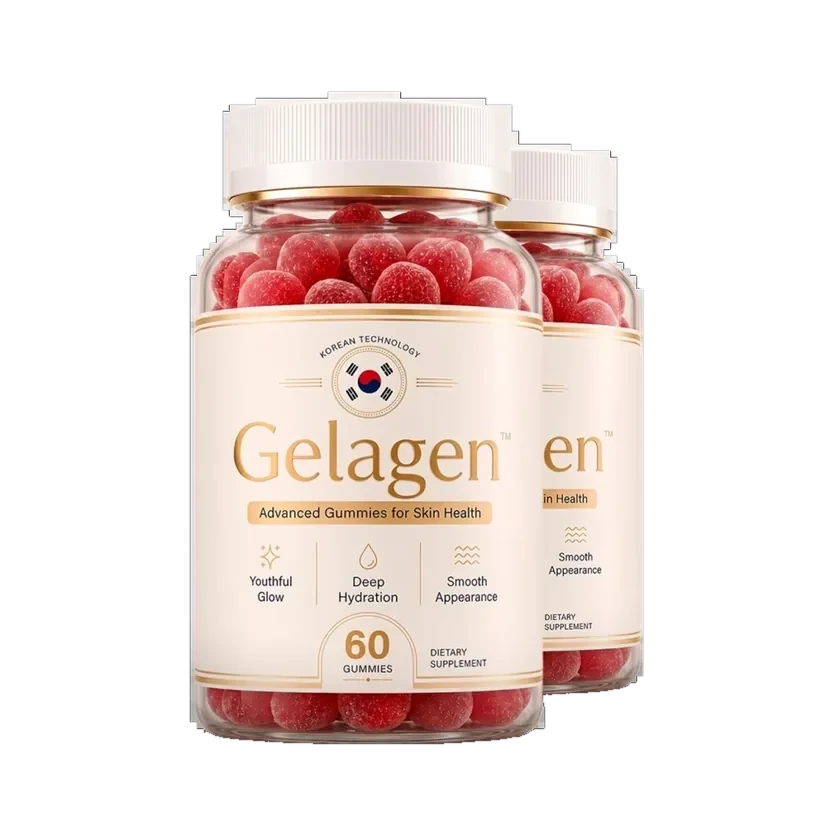
Once you have read the label here, the order page shows the packs, so the jar in your hand can be checked against it.
See today's price and guaranteeDisclosure: this desk earns money when an order is placed through its checkout.
- Serving size: two gummies. All thirteen amounts are per serving, so a day.
- Sixty gummies to the jar make 30 servings. No per-gummy amount is published.
- Biotin 5,000 mcg is about 167 times the 30 mcg reference. Four more rows sit at or above theirs.
- Six rows are a fraction of a day: vitamins A, C, D, E, iodine and zinc.
- Choline is 0.04 mg, a trace. Inositol has no Daily Value.
- No collagen, keratin, silica, botanical, amino acid or proprietary blend appears on the panel.
How is a Supplement Facts panel built?
A panel is a regulated form. The federal rule fixes its order: serving size, servings per container, then one line per nutrient with an amount by weight and a percent of the Daily Value. Anything with no Daily Value goes below a heavy line, and the other ingredients sit outside the box.
That fixed shape is a gift to buyers. Two products print the same fields in the same order, so you compare serving against serving, then amount against amount. A brand’s story has to live outside the box, which is where the front of a jar sits.
The shape that hides numbers is a proprietary blend, where one total covers several ingredients. Gelagen has no blend. Thirteen lines carry thirteen amounts.
What are all thirteen rows, and how do they compare?
Here is the whole panel in one place. “Reference” means the adult Daily Value or adequate intake printed on this website’s ingredients page. “Where it sits” is our arithmetic.
| Nutrient | Amount | Reference | Where it sits |
|---|---|---|---|
| Vitamin A | 630 mcg | 900 mcg | About 70% |
| Vitamin C | 20 mg | 90 mg | About 22% |
| Vitamin D | 10 mcg | 20 mcg | Half |
| Vitamin E | 7.4 mg | 15 mg | About half |
| Vitamin B6 | 2 mg | 1.7 mg | Just over |
| Folate | 442 mcg DFE | 400 mcg DFE | Just over |
| Vitamin B12 | 6 mcg | 2.4 mcg | About 2.5 times |
| Biotin | 5,000 mcg | 30 mcg | About 167 times |
| Pantothenic acid | 5.2 mg | 5 mg | On the reference |
| Choline | 0.04 mg | 550 mg | 0.007%, a trace |
| Iodine | 42 mcg | 150 mcg | 28% |
| Zinc | 2.7 mg | 11 mg | About a quarter |
| Inositol | 40 mcg | None set | No reference to compare |

How do the thirteen sort into groups?
Read together, the thirteen fall into four groups. This makes the label quick to scan.
- One very large figure: biotin at 5,000 mcg. A figure that size is a lab-test question more than a toxicity one, because no upper limit has been set for biotin.
- Four that cover a day or more: folate, vitamin B12, vitamin B6 and pantothenic acid. The caution about folate masking a B12 shortage applies to folate taken alone, and this panel carries both.
- Six that cover part of a day: vitamins A, C, D and E, iodine and zinc. That is the shape of a top-up, not a replacement for food.
- Two token rows: choline at 0.04 mg and inositol at 40 mcg.
So the label is a biotin product with twelve supporting names, not a multivitamin. If you already take a daily multivitamin, you are covered on most of these names, and the real question is whether you want the biotin figure.
Why are the units different?
Three rows use units that are not plain weights, and each has a reason.
- Folate is in mcg DFE, dietary folate equivalents. Folic acid from a supplement is absorbed better than folate from food, and the unit lets the two be added.
- Vitamin A is counted in retinol activity equivalents, for a similar reason. The form here is retinyl acetate, which is preformed vitamin A.
- Vitamin D is in micrograms, and 10 mcg is the same as 400 IU in the older unit.
Six rows also name a chemical form. Vitamin A is retinyl acetate, vitamin C is ascorbic acid, vitamin D is cholecalciferol (D3), vitamin E is d-alpha tocopheryl acetate, vitamin B6 is pyridoxine hydrochloride and vitamin B12 is methylcobalamin. These are common supplement forms.
Choline is printed as 0.04 mg, which is 40 micrograms written in milligrams. We copy the label’s own unit and do not convert it into something tidier.
What does the panel not tell you?
A panel says what goes into a serving. It does not say what you already had, how the nutrients behave together, or how well a gummy releases them. It cannot tell you whether you were short of anything before you started.
The other-ingredients line is also separate. A gummy usually carries more than nutrients, such as a sweetener and a gelling agent, and the physical bottle lists them below the panel. That line is not in our material. Read it on the jar if you avoid gelatin, added sugar or a particular colour.
Finally, the panel is not a test result. The lot code GEL-26/GE-6362 and certificate reference GEL-6362-26-GE are label references. No purity or potency figure sits behind them in anything we hold. Our batch page explains how to match a jar to an order.
How do you check your own jar against this page?
- Find the serving line. It should read two gummies.
- Find the biotin row. It should read 5,000 mcg.
- Compare the other twelve amounts with the table above.
- Read the other-ingredients line and the allergen statement.
- Read the lot code on the base and note the best-before date.
If anything disagrees with this page, the jar is right. Tell us at [email protected] with the lot code, and the page date will move with the fix.
Frequently asked questions
What are the Gelagen ingredients?
Thirteen nutrients per serving of two gummies: vitamins A, C, D, E, B6 and B12, folate, biotin, pantothenic acid, choline, iodine, zinc and inositol, each with a printed amount. Other ingredients are listed on the jar.
How much biotin is in Gelagen?
5,000 mcg per serving of two gummies, which is 5 mg. The adult reference is 30 mcg, so the amount is about 167 times that.
Does Gelagen contain collagen?
No. The panel is thirteen vitamins and minerals. Collagen, keratin and silica are not on it.
Are the amounts per gummy or per serving?
Per serving, which is two gummies. No per-gummy amount is published, so never halve a figure to describe one gummy.
Is vitamin A in Gelagen safe in pregnancy?
No. The label is not for anyone pregnant or nursing, because the vitamin A is the preformed kind, retinyl acetate. The panel prints 630 mcg against a 3,000 mcg upper limit for preformed vitamin A.
Where can I see the full label?
On the jar itself. The panel on your own bottle is the one that governs. Our supplement facts and ingredients pages copy it, and the jar is right if the two ever disagree.
Our view
This is a better label than most of its shelf. Every nutrient has a number, there is no blend, and the units are the label’s own. A buyer can check all of it in a few minutes, which is the right way round.
A good label is not a result. The panel tells you what goes in. It does not tell you what comes out, and the finished gummy has not been tested. Read the biotin row with care, and read the rows beneath it too, because only the biotin row sits far above its reference. The rest are modest or token.
A reminder: this is a supplement, not a drug, and it carries no FDA approval. Anyone pregnant, nursing, taking prescriptions or booked for a blood test should show this panel to a doctor or pharmacist first.

Read the thirteen rows, then compare them with the jar when it arrives; the order page shows the pack totals and the guarantee first.
See today's price and guaranteeDisclosure: this desk earns money when an order is placed through its checkout.
Last updated October 15, 2026
- 21 CFR 101.36 - Nutrition labeling of dietary supplements, Electronic Code of Federal Regulations → open the source
- Vitamin A and Carotenoids: Fact Sheet for Health Professionals, NIH Office of Dietary Supplements → open the source
- Iodine: Fact Sheet for Health Professionals, NIH Office of Dietary Supplements → open the source
- Choline: Fact Sheet for Health Professionals, NIH Office of Dietary Supplements → open the source